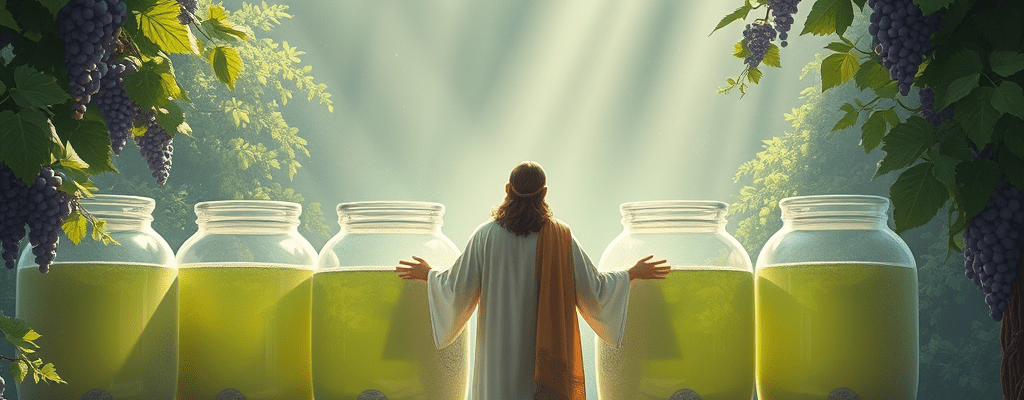

Is ‘wine’ always alcoholic in the pages of Scripture? From the cluster on the vine to the overflow of the winepress, the Bible uses a single word to describe the grape in every stage of its life. For centuries, the wedding at Cana has been used as a permission slip for the consumption of alcohol. But what if our modern definition of ‘wine’ has blinded us to the true nature of Christ’s first miracle?
To suggest that the Savior of the world produced a substance the Bible elsewhere calls ‘a mocker’ is to miss the profound purity of His creative act. As Jesus stood before six stone water jars in Galilee, He wasn’t just solving a social embarrassment—He was revealing His identity as the Creator.
Many argue that the ‘best wine’ He produced was merely a potent intoxicant. However, an honest assessment of the biblical text and the immediate nature of His power reveal a different story. By examining the ‘wine’ of John 2, we discover a beverage that matches the perfect nature of the One who made it—pure, refreshing, and entirely restorative. It is time to look past the fermentation of the ‘natural’ and see the supernatural juice of the Creator.
In John 2, we don’t find the product of a brewery; we find the very hand of God.
The Miracle at Cana
The turning of water into wine in John 2 is often the first “proof text” cited by those defending the consumption of alcohol. However, a closer look at the biblical text, the nature of the miracle, and the character of Christ suggests a much different conclusion. To understand John 2, we must first understand the biblical definition of “wine.”
1. Wine: A Generic Term Defined by Context
In both Hebrew (yayin) and Greek (oinos), the word for wine is a generic term. It is used to describe the juice of the grape in all its stages—whether fermented or unfermented. To assume “wine” always implies alcohol is a linguistic error that ignores the biblical context.
Scripture frequently refers to “wine” in ways that cannot possibly refer to an intoxicating beverage:
- On the vine: The “new wine” is found in the cluster (Isaiah 65:8).
- In the press: The treading of grapes produces “wine” directly into the vats (Isaiah 16:10; Joel 2:24).
- As a harvest blessing: It is often listed alongside grain and oil as a natural product of the field.
No right-thinking person would contend that the liquid still inside a grape cluster on the vine is alcoholic. It is the “fruit of the vine” in its most natural, pure state.
2. The Supernatural vs. The Natural
A common argument for alcoholic wine in John 2 rests on the “natural fermentation” process. Critics argue that yeast exists on grape skins, and therefore the fermentation process begins instantaneously. However, we must ask: Where are the grapes in John 2 (credit Keith Ritchie for the question)?
There were no grape skins, no vats, and no aging process. Jesus did not use the natural, fallen processes of decay (which is what fermentation is) to create this wine. He created it supernaturally and instantaneously from water. To force the “natural” process of fermentation onto a “supernatural” act of creation is a logical fallacy.
3. The Character of the Creator
The wine Jesus created was undoubtedly the “best” (John 2:10). In the context of Christ’s perfect nature, “best” does not mean “most intoxicating,” but rather the most pure, refreshing, and life-giving juice the world has ever seen.
| Aspect | The Alcoholic Interpretation | The Pure Juice Interpretation |
| Nature of Christ | Creates a substance that can lead to woe and mockery (Proverbs 20:1). | Creates a pure, life-giving “fruit of the vine.” |
| Creative Process | Relies on the process of fermentation (decay). | An immediate act of new creation. |
| Restorative Mission | Provides a beverage associated with historical ruin. | Transforms the common (water) into the created (pure juice). |
4. “The Best for Last”
When the Governor of the feast tasted the water-made-wine, he was astonished. He remarked to the bridegroom, “Every man at the beginning sets out the good wine… but you have kept the good wine until now” (John 2:10).
Those who argue for alcohol suggest “good” refers to high potency. However, in the ancient world, the “best” wine was widely understood by many historians and scholars to be the purest, filtered juice—that which had not yet been corrupted by the souring process of fermentation. The Governor wasn’t tasting the “best” because it was the most intoxicating; he was tasting the “best” because it was fresh from the hand of the Creator. It possessed a vitality and sweetness that no fermented product, which is essentially juice in a state of death and decomposition, could ever achieve.
The Miracle of Transformation
The Wine of Cana was not a product of the brewery, but a product of the Creator. It was “new wine” in the truest sense—untainted by the leaven of fermentation, which is frequently used in Scripture as a symbol of sin and corruption. By providing the purest juice possible, Jesus demonstrated His power to restore and His desire to give only that which is good and perfect to His people. Just as He transforms a sinner into a saint—not through a process of gradual decay, but through a miraculous washing (Revelation 1:5)—He transformed the water into a beverage that reflected His own purity.
If we at the Eastside Church of Christ can assist you in your walk with God, please, allow us the gift of helping you.
God loves you and we do too.
 eastsidecocmorganton.com